Amphibious Disaster Response Vehicles
Multipurpose Logistical Vehicle Conversion
Amphibious vehicles for Humanitarian and Disaster Response roles in ASEAN region
Problem
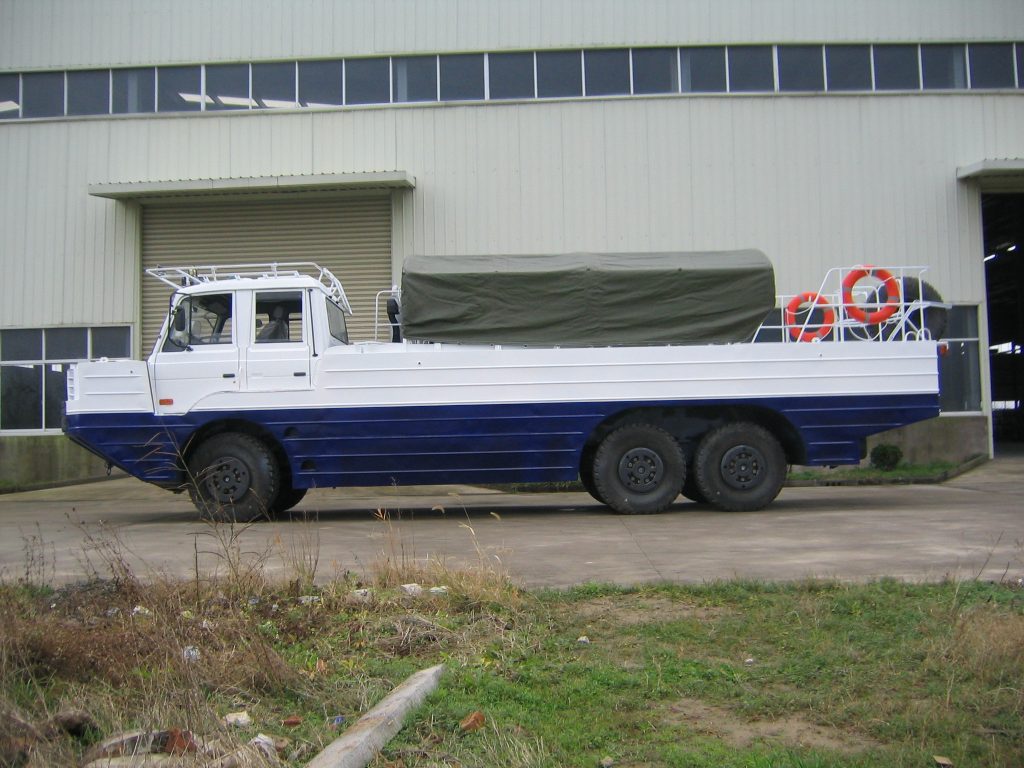
The increasing frequency and severity of natural disasters in the ASEAN region and South Asia coupled with the pandemic and its response have merged, with the capabilities and assets of regional relief agencies being stressed. There is a distinct need for innovation to help provide an agile and importantly, cost-effective means of delivering aid and material in response to emergencies of all kinds though an array of operating environments.
Current amphibious vehicle options are extremely limited, being for the most part vintage ex-military units, prone to mechanical failure and part scarcity or costly bespoke systems.
Solution
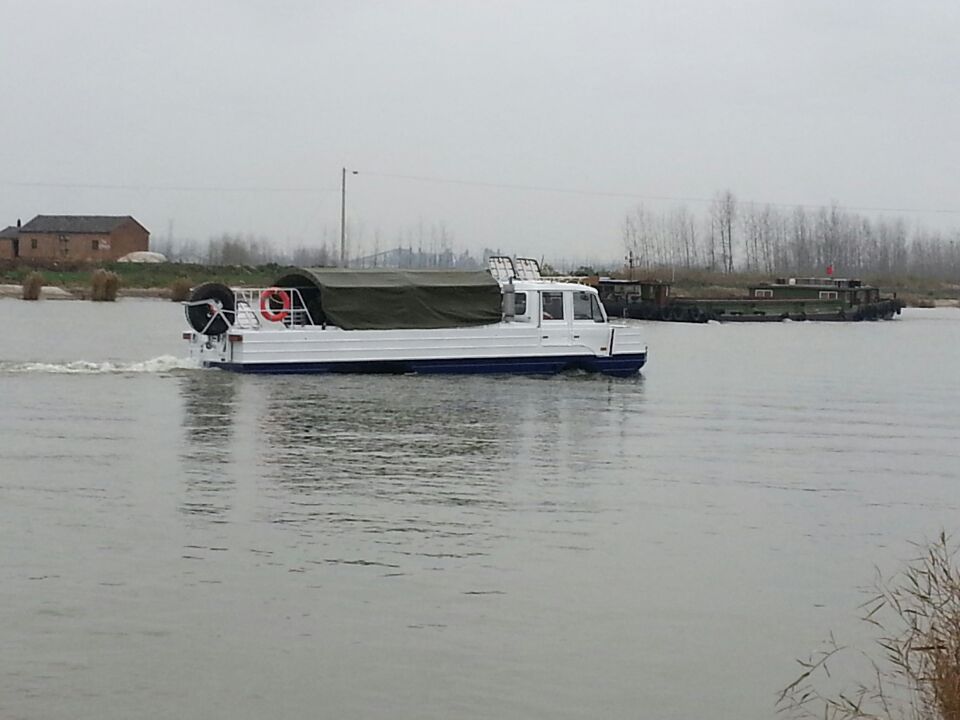
Amphibious vehicles, converted from a wide range of modern donor chassis types, provide a versatile platform for a number response and relief solutions. They will be able to assist coastal, riverine, delta and island communities particularly at risk to natural disasters, able to be tasked and rapidly re-tasked in modular fashion to suit changing response needs. Inland communities affected by disasters for example are also able to be reached, and multi-wheel drive units mean that they can access areas rapidly by road or off-road as conditions dictate.
Flexibility of movement to response locations by either military ships or commercial vessels of opportunity means competitive transport costs, although air delivery is entirely possible where time is critical. A self-drive capability with good road speed and 4×4 or 6×6 rough terrain performance also increases deployment efficiency
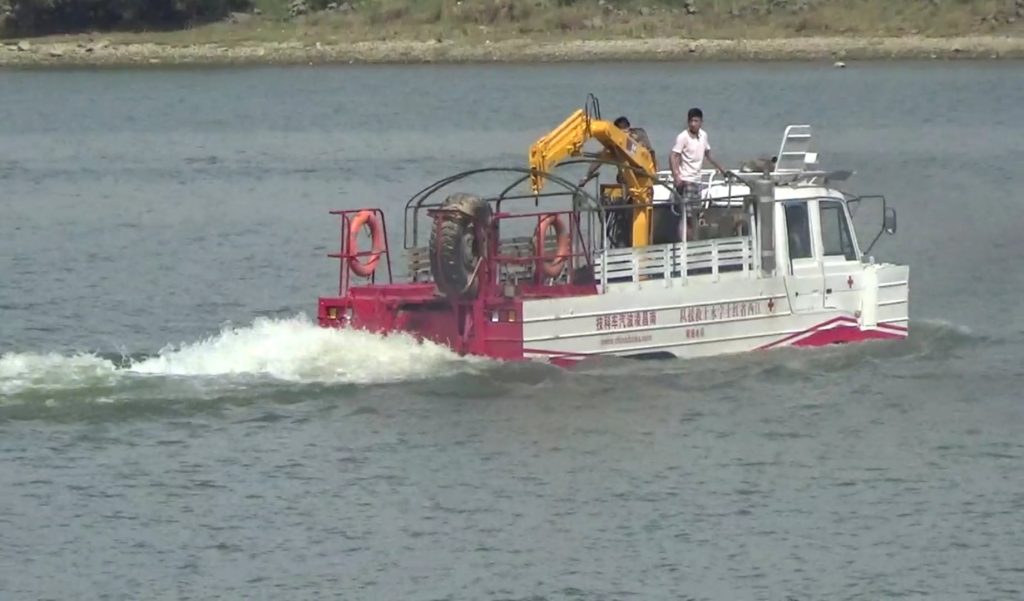
Smaller 4 x4 units can also be produced to assist with urban flooding, being able to operate in congested areas with crane and basket equipment to reach those stranded on roofs or above ground floor accommodation. Skid-mounted, high capacity de-watering pumps can be easily and rapidly mounted to the vehicles and used as mobile pumping stations in urban flood scenarios, directed to locations where needed without regard for dry access.
Using up to date, technically supported and safety compliant vehicle options allows a large degree of regional self-reliance which supports the One ASEAN One Response initiative. This also allows improved reliability, safety and a considerable reduction in parts and servicing costs. The conversion process itself also represents a significant savings factor with the option of local production in ASEAN states with factory oversight. This in turn brings employment opportunity and investment benefits.


Aim of demonstration and trial program
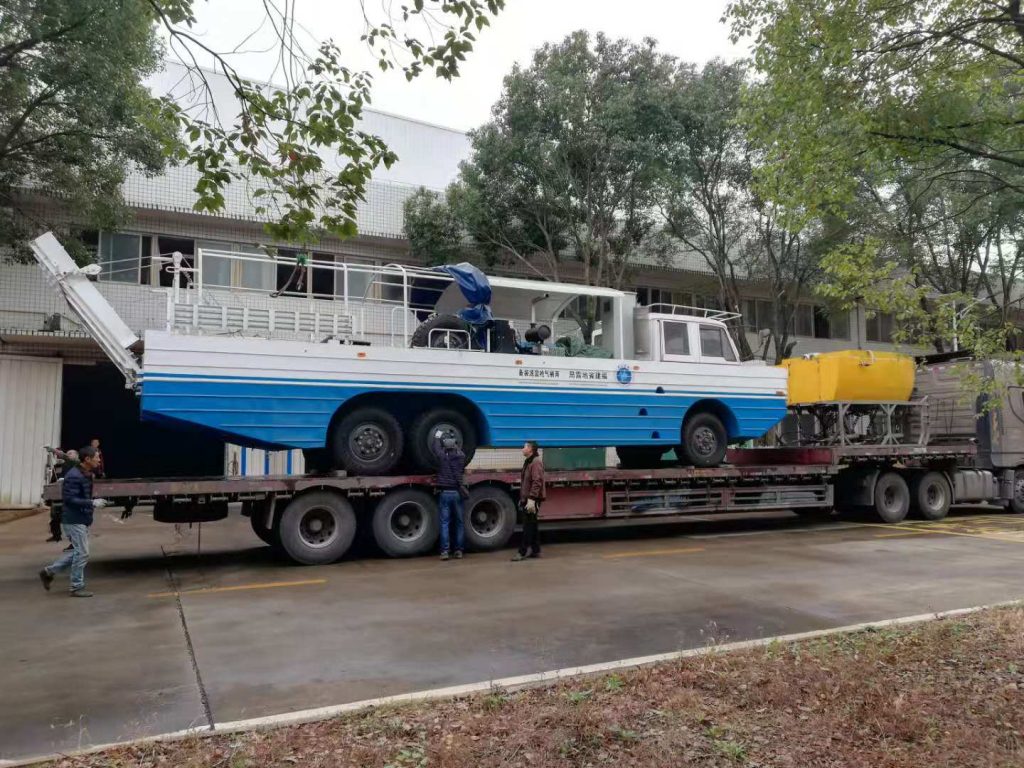
The goal of this initial exercise is to arrange for a trial of demonstration unit in SE Asia. Live exercises will then be held at suitable locations such as river and coastal sites, showcasing the advantage of the vehicle’s capabilities and versatility in water and land conditions. Supporting technology and products will also ideally be trialled along with the vehicles to demonstrate the enhanced response potential.
These will be for the benefit of regional relief agencies who may wish to attend. The testing will also form the basis to compile a comprehensive performance report for potential clients, detailing key metrics. This is intended to be a small-scale initial project to determine possible demand and to proceed at scale at a suitable rate.
Vehicle Features
Ship to shore cargo and logistical operations
Demonstrating the movement of material from assistance vessels offshore, to a landing site and transitioning to inland transport and distribution. A significant quantity of supplies can be quickly and efficiently transferred from shipping to shore locations. This can be accomplished without the need for port or harbour infrastructure which may be compromised post disaster or non-existent in remote locations. Additionally, coastal roads may be damaged so material may be moved by short sea passages. Inter-island cargo movement is also facilitated. This is a particularly compelling use case in the aftermath of tsunamis, where relief material can be readily transported by ship to the location, but where transition ashore by conventional means is impossible or difficult.
Mobile medical clinic and flood response
Responding to disaster incidents as well as supporting vaccine deployment. Units can be fitted with an array of medical equipment for trauma and primary health care assistance. Much of this equipment can also be portable and solar powered for use in the remote field when or where necessary. This includes vaccine fridges that can be deployed to Last Mile locations via the vehicle as well a number of secondary delivery means such as drones, motorcycles or on foot.
Vehicles configured as a forward refuelling point for rotary/fixed wing aircraft
Fuel carried on board in lightweight, flexible tanks would greatly enhance helicopter response by extending operating ranges beyond fixed bases and airfields. Jet A1 fuel could be carried in loads of 5000 ltrs and upwards depending on truck size, which represents a significant advantage in remote fueling. The flexibility provided by the amphibious, off-road capabilities means establishing temporary fuel points previously unavailable to aviation assets. Resupply to the vehicle in the field is possible by fixed wing airdropped flexible tanks, further extending operations.
Mobile reverse osmosis water production units
This equipment allows the production of safe drinking water from a number of sources including sea water, brackish and even standing floodwater. Advances in technology now enable these to be solar powered which would be invaluable in relief scenarios, reducing the need for generators and fuel and ensuring clean drinking water is rapidly available in the immediate aftermath of a disaster. Suitable filtration methods prevent contamination by heavy metals, pesticides and petrochemical substances. A single vehicle could be equipped with systems that would produce significant amounts of water at speed and scale where needed. In addition to a central supply point, several water provision stations could be established using flexible tanks at several locations and then serviced by a water production vehicle on a regular rotation. This would maximise use of one vehicle and leverage its amphibious mobility.
Command, control and forward refuelling base for Unpiloted Aerial Vehicles
UAV are now relatively standard for disaster mapping and needs assessment as well as recording response feedback. Medical cargo delivery is now also an established technique and could significantly assist with vaccine roll out. The vehicle can provide a roving UAV base which in turn would yield crucial information about areas to be reached by relief agencies as well as updating ongoing operations. Communications equipment on board would provide a link with field teams to a coordinating base and include national and international actors.
3D printing
Advances in this technology now allow for the real time manufacture in the field of relief items, spares and tools allowing increased autonomy of operation.
Hydrogen fuel cells for clean power
Hydrogen fuel cells are an emerging yet compelling concept allowing for clean, quiet power generation in place of fossil fuel powered systems. This is a rapidly maturing technology that already provides for extended range UAS operations.
Vehicle Detail
Particulars for the vehicle intended for demonstration are;
Weight
12.7 Ton
Dimensions
Length 9.6m / Width 2.5m /
Height 3.33m
Payload
5000kg
Draft: 1.2m Max road speed: 90km/hr Water cruise speed: 8-10 km/hr
Road range: 800km Water range: 80km Crane capacity: 2000kg
These figures relate to the test unit; however, performance will vary depending on donor units employed and specific requirements can be factored into design. Land and water ranges can be extended by additional fuel tanks. They will also have the inbuilt capacity to refuel from assistance vessels offshore and be equipped with on board fuel filtering and dewatering equipment to optimise safety and performance. This allows use of fuel from nonstandard supply sources.
Amphibious Disaster Response Vehicles
Personnel and collaborating companies
Mr Richard Coe. Marine Engineer and Project Leader, UK
Mr Luo Guangyu. Chief Designer, Nanchang China
Dr Silverius Purba, Medical Practitioner in Jakarta Indonesia.
Humanitarian Logistics Association, www. humanitarianlogistics.org
Skycorp, www.sky-corp.eu. UAS for mapping and data gathering using hydrogen fuel cell technology.
MuchMoreWater, www.muchmorewater.com. Reverse osmosis water production.
Spectra Watermakers, www.spectrawatermakers.com. Reverse osmosis water production and ultra-filtration.
What3Words, www.what3words.com. Simple geolocation, mobile app and UAS compatible navigation system.
Field Ready, www.fieldready.org. 3D printing in remote environments for humanitarian and relief items.
Environmental Systems Research Institute, www.esri.com. World leading Geographic Information Systems. They have provided a Service Agreement with Richard Coe.